You can practice speaking a language by yourself by talking out loud every day: narrate what you are doing, shadow native speakers, record yourself, rehearse real conversations and, when you want something to talk back, use an AI conversation partner. Here is how to do each one, plus a 15-minute routine that puts them together.
1. Talk to yourself, out loud
Describe what you are doing as you do it: “I’m making coffee. The water is too hot. I need milk.” It feels strange at first, but it trains you to find words quickly without the pressure of a listener. When you get stuck on a word, note it and look it up afterward instead of stopping.
2. Shadow native speakers
Play a short clip of a native speaker, such as a podcast for learners or a scene from a show, and repeat each sentence straight after them, copying the rhythm and intonation as closely as you can. Start with slow, clear audio and replay the same clip several times before moving on.
3. Record yourself and listen back
Answer a simple question out loud for one minute, such as “What did you do last weekend?”, and record it on your phone. Listen back and pick one thing to improve: a sound you keep getting wrong, a word you hesitated over or a phrase that came out stiff. Record the same answer again a week later to hear the difference.
4. Rehearse real conversations
Write short scripts for situations you will actually face, such as ordering food, introducing yourself, asking for directions or a job interview. Practice both sides of the conversation, then change the details each time so you are not just reciting.
5. Read aloud
Reading aloud for a few minutes a day helps your mouth get used to new sounds and word combinations. Choose something slightly below your level, such as graded readers, children’s books or news written for learners, so you can focus on sounding natural.
6. Think in the language
Switch your inner voice to the language you are learning while you walk, cook or commute. Plan your day, comment on what you see or replay a conversation in your head. It is free practice that fits into time you already have.
7. Practice with an AI conversation partner
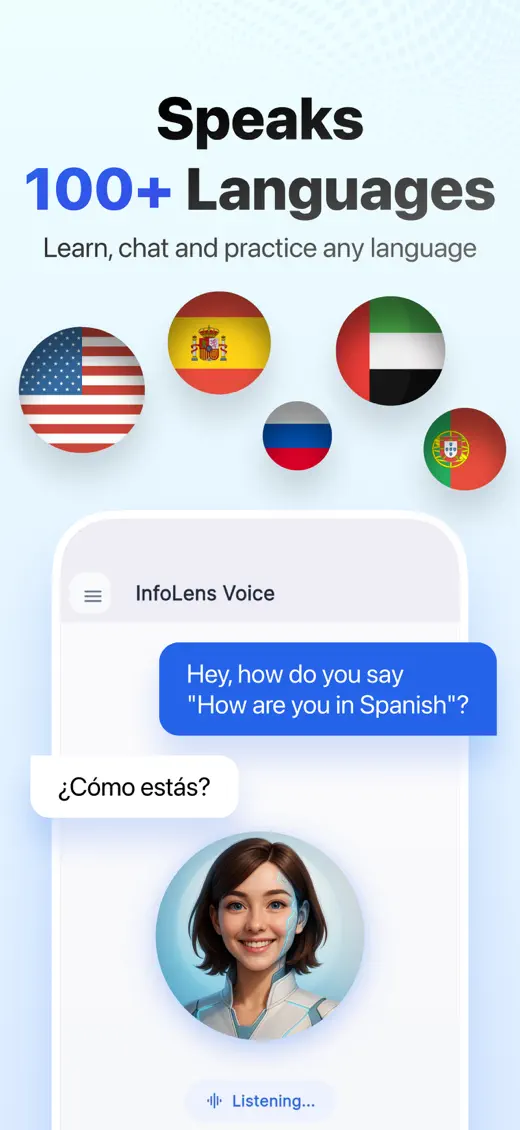
Talking to yourself has one big gap: nobody answers. AI voice apps fill that gap with a real back-and-forth conversation at any time, without the nerves of speaking to a stranger. You can ask the AI to speak slowly, correct you gently, explain a word in English or replay a situation as many times as you like.
Try it with InfoLens Voice
InfoLens Voice is our AI voice assistant. It speaks more than 100 languages, remembers your goals between sessions and lets you switch to text whenever you want to see a word written down.
A 15-minute daily routine
- 3 minutes: talk to yourself about your day so far.
- 4 minutes: shadow a short native clip.
- 5 minutes: have a conversation, either a rehearsed script or a chat with an AI partner.
- 3 minutes: record a one-minute answer and listen back for one thing to fix.
Short daily sessions are easier to keep up than occasional long ones, and consistency is what builds speaking confidence.
When you are ready, add real people
Practicing alone builds fluency and confidence, but real conversations add things no routine can: unexpected questions, different accents and the need to understand someone in real time. When you feel ready, try a language exchange, a tutor or a local conversation group, and keep your solo routine going alongside.
Common questions
Can you become fluent by practicing alone?
Solo practice can take you a long way, especially for fluency and confidence. Combining it with conversations with real people is the best way to improve your listening and handle the unexpected.
How long should I practice speaking each day?
Even 10 to 15 minutes a day helps if you do it consistently. Short daily sessions are easier to keep up than occasional long ones.
Is talking to an AI good speaking practice?
Yes. It gives you a patient partner at any time, and you can ask for corrections or explanations. Check important grammar points against a trusted course or teacher.
What if I am learning English?
All of these methods work for English too. See our guide to practicing speaking English with AI.